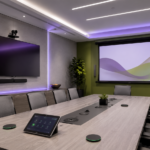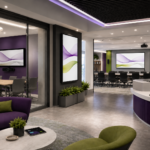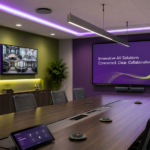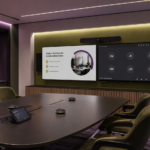
Modern AV integration is not just about putting displays in rooms. It is about helping people communicate, teach, train, present, and collaborate more effectively. In CCS Presentation Systems’ evergreen article, AV Integration for Modern Organizations and Smarter National Workspaces, Epson is included as one of the trusted AV technology manufacturers that can help organizations build smarter, more effective environments.
That makes sense. Epson has long been one of the leading names in projection technology, especially for business, education, training, large venue, meeting room, and digital signage applications. For organizations that need larger visual experiences, flexible room designs, and dependable presentation performance, Epson projection solutions can play an important role in a professional AV integration strategy.
For many organizations, projection still matters. A lot.
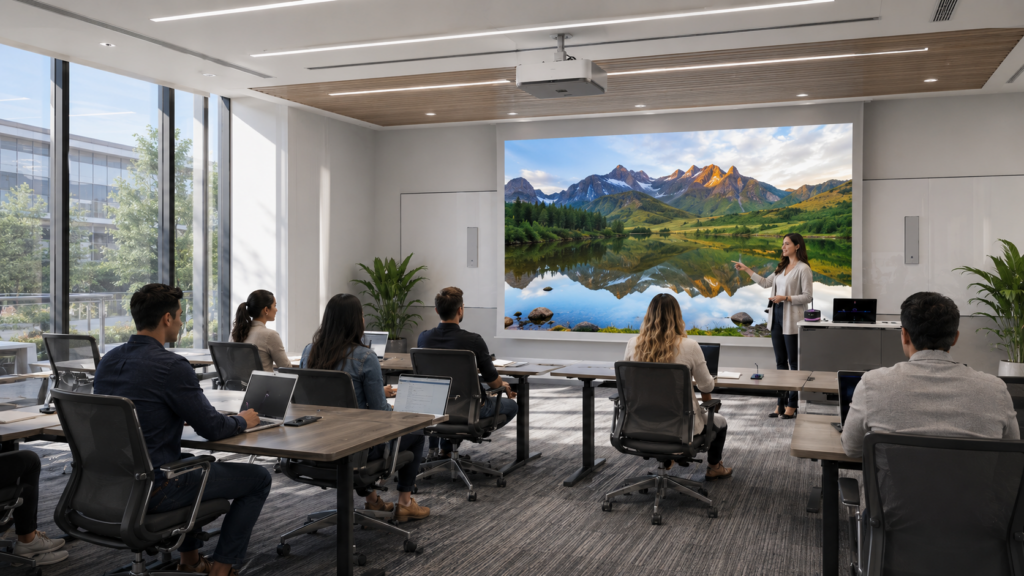
Flat panels are excellent for many conference rooms, huddle spaces, and signage applications, but there are still environments where projection is the better answer. Training rooms, lecture halls, auditoriums, houses of worship, divisible meeting spaces, large classrooms, and multi-purpose rooms often need bigger images, flexible placement, strong visibility, and scalable system design. That is where Epson projectors can become a key part of a complete AV solution.
One of the biggest advantages of projection is image size. In a larger room, the display has to serve the entire audience, not just the people sitting closest to the screen. If people in the back of the room cannot clearly see the content, the technology is failing at its most basic job. Epson projection systems help organizations create larger, more immersive visual experiences that support presentations, training, instruction, collaboration, and live events.
For education, Epson is especially relevant. Today’s classrooms are no longer limited to static lectures or basic slide presentations. Teachers and instructors need to show video, online resources, digital curriculum, remote participants, student work, and interactive content. A well-designed Epson projection system can help make that content easier to see, easier to share, and easier to use across the entire room.
The same idea applies to corporate training rooms. Training spaces are often used for onboarding, sales meetings, leadership sessions, product education, compliance training, workshops, and hybrid instruction. These rooms need to be flexible because the use case may change from one day to the next. One day it is a small group presentation. The next day it is a full-room training session. The next week it may be a remote learning event with participants joining from multiple locations. Projection gives organizations the ability to scale the visual experience to the room.
This is also why Epson fits so well within a broader AV integration plan for modern organizations. A smart workspace is not built around one product category. It is built around how the room will actually be used. A small meeting room might need a commercial display. A large training room might need projection. A lobby may need digital signage. A lecture hall may need projection, microphones, cameras, control systems, and content sharing tools. The right technology depends on the room, the audience, and the purpose.
That is the part many organizations get wrong. They buy the product first and figure out the room later. That is backwards. The room should drive the technology decision.
A professional AV integration team looks at room size, ceiling height, ambient light, audience layout, viewing distance, content type, sound reinforcement, control systems, cabling, network access, mounting options, and long-term maintenance. Epson projectors can be powerful tools, but they need to be selected and installed correctly. Brightness, throw distance, lensing, screen material, mounting location, and control integration all matter. Miss those details and even a good projector can produce a bad experience. AV is not magic. It is planning with cables.
Epson’s projector options give organizations and integrators flexibility across many environments. A higher education lecture hall may need a different projection approach than a corporate training room. A house of worship may need a different setup than a government briefing room. A large divisible room may need multiple projection zones, audio zones, and control presets. By working with CCS, organizations can match the right Epson projection technology to the actual needs of each space.
For national organizations, this flexibility becomes even more valuable. A company with offices across several states may not be able to use the exact same room design everywhere. Room dimensions, infrastructure, ceiling conditions, lighting, and local needs can vary. However, the user experience should still feel consistent. CCS Presentation Systems can help organizations develop AV standards that include Epson projection where it makes sense, while also coordinating displays, audio, cameras, control systems, and support across multiple locations.
Epson projection can also support digital signage and visual communication. In some environments, projected content can create a larger, more dynamic visual experience than traditional displays. This may be useful in lobbies, event spaces, campus environments, museums, entertainment venues, and branded experience centers. When tied into a broader AV system, projection can become part of the organization’s communication strategy, not just a presentation tool.
Another important factor is ease of use. The best AV systems are the ones people actually use. A training room should not require a technician every time someone wants to start a presentation. A classroom should not make a teacher fight with inputs while students wait. A boardroom should not derail a meeting because no one knows how to turn the system on. CCS helps solve that by integrating Epson projectors into complete room systems with clear controls, reliable signal routing, proper audio, and user training.
That complete-system approach is what separates professional AV integration from simply buying equipment. Epson provides strong projection technology, but the room experience depends on how everything works together. The projector, screen, audio, control interface, source devices, cameras, network, and lighting all need to support the same goal: making communication easier and more effective.
For schools, universities, corporations, government agencies, healthcare organizations, and houses of worship, Epson projection solutions can be a strong part of a smarter AV strategy. They can help make content larger, clearer, more flexible, and more effective for the people in the room. But the real value comes when those solutions are designed as part of a complete system.
CCS Presentation Systems helps organizations evaluate their spaces, choose the right Epson projection technology, and integrate it with the displays, audio, cameras, controls, and infrastructure needed to create a reliable user experience.
Ready to upgrade your classrooms, training rooms, meeting spaces, or large venues? Learn more about Epson solutions from CCS Presentation Systems or contact your local CCS office to explore professional AV integration options built around the way your organization works.