Hybrid meetings are now a regular part of how businesses, schools, healthcare organizations, government teams, and professional groups communicate. Some participants may be sitting around the conference table, while others join from home, another office, or a different region. For those meetings to feel productive, everyone needs to be able to see, hear, share, and participate clearly.
A strong hybrid meeting experience does not happen by accident. It requires the right mix of displays, cameras, microphones, speakers, control systems, cabling, and room design. When these pieces work together, meetings feel smoother, more natural, and easier to manage. When they do not, users are left dealing with poor audio, awkward camera angles, connection issues, and frustrated remote participants.
At CCS Presentation Systems, our team helps organizations design and install AV systems that support better communication in modern meeting spaces. Whether you are upgrading one conference room or improving hybrid meeting rooms across multiple locations, CCS can help create a solution built around the way your teams actually meet.
Why Hybrid Meetings Need Better AV Design
Hybrid meetings are different from traditional in-room meetings. In a fully in-person meeting, everyone can see and hear each other naturally. In a hybrid meeting, the room has to represent the in-person group to the remote participants and bring the remote participants into the room.
That means the AV system has to do several jobs at once. It needs to capture voices clearly, show remote attendees on a display, make shared content easy to view, provide strong speaker coverage, and keep the room simple enough for everyday users.
If the room is not designed properly, common problems can include:
Poor microphone pickup
Muffled or uneven audio
Remote participants feeling disconnected
Camera views that miss people in the room
Displays that are too small or poorly placed
Confusing cables and connection points
Meetings that take too long to start
Professional AV design helps reduce these issues and creates a more reliable experience.
Clear Displays for Better Participation
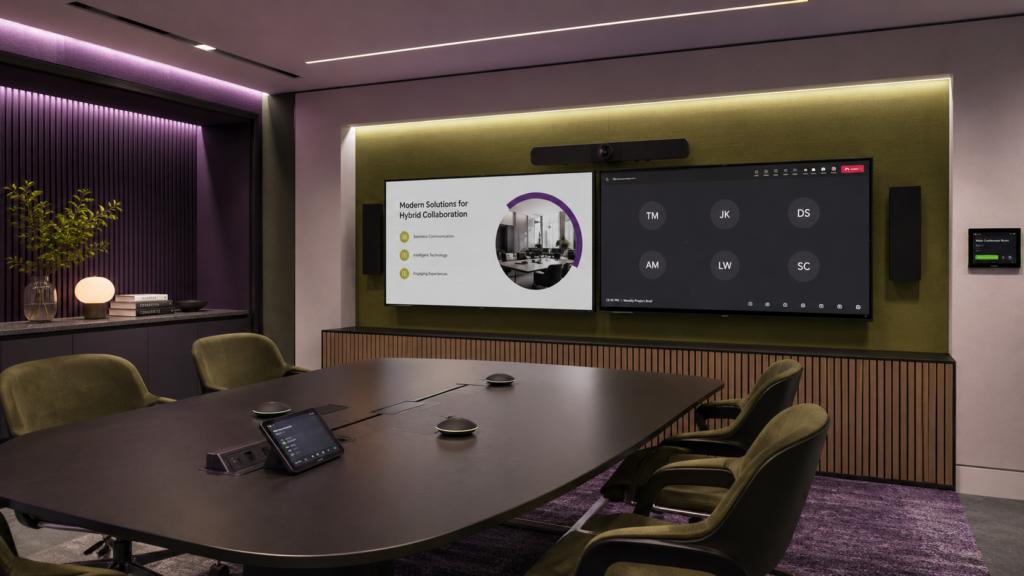
Displays are one of the most important parts of a hybrid meeting room. They allow in-room participants to see remote attendees, shared presentations, dashboards, documents, and video content.
Professional display solutions from brands like LG and Sharp can help create clearer, more polished hybrid meeting spaces. In smaller rooms, one display may be enough. In larger conference rooms or boardrooms, multiple displays may make more sense so remote participants and shared content can be viewed at the same time.
Display placement also matters. A screen should be large enough for the room, positioned at a comfortable viewing height, and placed where people can see it without turning away from the conversation. CCS helps organizations select the right display size, location, and setup based on the room layout and meeting goals.
Cameras That Make Remote Participants Feel Included
The camera plays a major role in how remote attendees experience the meeting. If the camera is too far away, mounted too high, or aimed poorly, remote participants may feel disconnected from the people in the room.
A good hybrid meeting camera setup should provide a clear view of the participants and support natural conversation. Depending on the space, that may include a camera bar, PTZ camera, fixed camera, or multiple camera angles.
For larger conference rooms, classrooms, and training spaces, camera placement should be planned carefully. The goal is to help remote attendees understand who is speaking, follow the discussion, and feel included in the meeting.
Microphones and Speakers for Clear Communication
Audio is often the most important part of a hybrid meeting. People may tolerate a less-than-perfect video feed, but if they cannot hear clearly, the meeting becomes difficult to follow.
Professional microphones and speakers help make conversations easier for everyone. Brands like Shure offer audio solutions for conferencing, collaboration, classrooms, and meeting spaces. Shure’s conferencing solutions can support clearer voice pickup and more dependable communication for hybrid environments.
The right microphone setup depends on the room. Some spaces may benefit from tabletop microphones, while others may need ceiling microphones, wireless microphones, or a combination of solutions. Speakers also need to be placed so remote voices are heard clearly throughout the room without creating echo or feedback.
Control Systems That Make Rooms Easier to Use
A hybrid meeting room should be easy to operate. Users should not have to search for remotes, guess which cable to plug in, or call IT every time they need to start a meeting.
A simple control interface can help users turn on displays, adjust volume, select sources, start video calls, and manage room settings. When displays, microphones, cameras, speakers, and conferencing tools are integrated into one system, the room becomes easier and more predictable.
Through our AV integration services, CCS helps create meeting spaces that are built for real-world use. The goal is to make the technology feel simple, even when the system behind it is doing a lot.
Connectivity and Cabling Behind the Scenes
Reliable connectivity is essential for hybrid meetings. Users may need to connect laptops, share content, plug into table boxes, use USB devices, access network connections, or route signals through equipment racks.
Connectivity products from brands like Covid can help support the cabling, wall plates, panels, extenders, adapters, and signal management products that keep AV systems connected. Clean infrastructure helps reduce clutter and makes the room easier to support over time.
A well-designed hybrid room should have connection points where users need them, cable paths that are organized, and infrastructure that supports the system now and in the future.
Room Layout Matters Too
Technology alone does not create a great hybrid meeting experience. The layout of the room also matters.
Seating position, table shape, camera location, display placement, lighting, acoustics, and background views all affect how the room performs. A camera may not work well if participants sit too far outside the frame. A microphone may struggle if people are spread out unevenly. A display may be difficult to see if it is placed too high or too far from the table.
CCS helps organizations think through the full room experience before recommending equipment. Through our AV solutions, we help design hybrid spaces that support the way people actually meet, present, and collaborate.
Hybrid AV for Many Types of Spaces
Hybrid meeting technology is not limited to corporate boardrooms. It can support many different environments, including:
Conference rooms
Executive boardrooms
Training rooms
Classrooms
Healthcare meeting spaces
Government facilities
Higher education spaces
Houses of worship
Multipurpose rooms
Collaboration areas
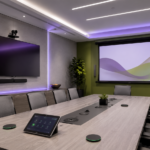
Each space has different needs. A small huddle room may need a compact display, camera, and microphone setup. A large training room may need multiple displays, presenter microphones, audience audio coverage, and camera tracking. A boardroom may need a more polished system with advanced control and clean installation.
Build Better Hybrid Meeting Rooms with CCS
If your organization is ready to improve hybrid communication, the right AV system can make a major difference. Displays, cameras, microphones, speakers, control systems, cabling, and room layout all need to work together to create a meeting experience that feels clear, simple, and reliable.
CCS works with businesses, schools, healthcare facilities, government organizations, hospitality spaces, houses of worship, and other professional environments to design AV systems that support better collaboration.
Ready to create better hybrid meeting experiences? Visit CCS Presentation Systems or contact CCS to start planning your next AV project.