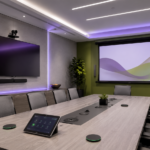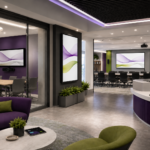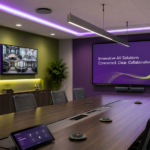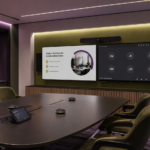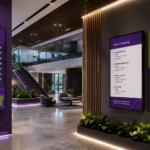

As we look toward the future of Audio-Visual (AV) technology in 2025, several exciting trends are emerging that promise to redefine how businesses, schools, and other organizations utilize AV systems. From immersive audio experiences to cutting-edge displays and AI-driven solutions, the AV industry is on the verge of significant advancements. These trends will not only improve the quality of communication and collaboration but also enhance overall user experiences across various sectors.
At CCS Presentation Systems, we’re at the forefront of these innovations, integrating the latest AV technologies into systems that meet the unique needs of our clients. Here’s a look at the top AV trends to keep an eye on in 2025.
1. Immersive Audio Experiences
One of the most exciting developments in AV technology is the rise of immersive audio experiences, especially in environments like classrooms, boardrooms, and entertainment venues. In 2025, we expect to see a more widespread adoption of 3D audio technologies, such as Dolby Atmos and spatial audio. These systems create an enveloping sound environment that makes it feel as though sound is coming from all around the listener, rather than from a single direction.
For businesses and educational institutions in Arizona, immersive audio systems can transform presentations, virtual meetings, and classroom learning experiences. For instance, imagine a classroom where students can hear sounds coming from different directions, helping them engage with the material in a more dynamic way. Similarly, in corporate settings, 3D audio can enhance virtual meetings, making remote collaboration more natural and intuitive.
These audio systems will be particularly valuable for schools, theaters, conference centers, and businesses hosting virtual events or training sessions. By incorporating spatial audio, organizations can create a more engaging and realistic experience, leading to improved audience attention and retention.
2. dvLED Displays
Direct-view LED (dvLED) displays are set to become a dominant technology in 2025, thanks to their exceptional brightness, color accuracy, and versatility. Unlike traditional LCDs or projectors, dvLED displays offer superior image quality and are perfect for large-scale installations. These displays provide vibrant colors and crystal-clear resolution, even in environments with high ambient light, such as conference rooms and auditoriums.
What makes dvLED displays stand out is their modular design, allowing organizations to create custom-sized screens that perfectly fit their space. This adaptability makes them ideal for schools and businesses in Arizona, where custom AV solutions are often required. Whether it’s a large video wall for a corporate lobby, an interactive display for a classroom, or a digital signage solution for a retail store, dvLED technology can meet the most demanding display needs.
In addition to their excellent visual performance, dvLED displays are energy-efficient, offering a more sustainable solution compared to traditional display technologies. This makes them a great choice for businesses and educational institutions looking to reduce their energy consumption and carbon footprint.
3. AI-Driven AV Solutions
Artificial intelligence (AI) is making its way into AV solutions, offering smarter, more intuitive systems that learn and adapt to user behaviors. In 2025, AI-driven AV systems will become increasingly common, particularly in business and educational settings. These solutions are designed to automate tasks, improve efficiency, and enhance user experiences.
For example, AI-powered video conferencing systems can automatically adjust the camera to focus on the speaker, ensuring that remote participants always have a clear view of the person talking. In classrooms, AI can be used to personalize learning experiences by adjusting the AV system to match the preferences of individual students. AI-driven analytics can also help businesses and schools optimize their AV systems by providing real-time data on usage patterns and system performance.
For businesses in Arizona, implementing AI-driven AV solutions can lead to more efficient operations, reduced downtime, and improved collaboration. Schools and universities can benefit from AI technology by creating dynamic, interactive learning environments that cater to the specific needs of students.
4. Enhanced Video Conferencing Solutions
As hybrid work and learning environments continue to thrive, the demand for advanced video conferencing solutions is growing. In 2025, we expect video conferencing systems to become even more sophisticated, with features such as ultra-high-definition (UHD) video, improved audio quality, and advanced collaboration tools.
Video conferencing platforms are integrating AI and machine learning to automatically adjust lighting and sound, providing users with the best possible experience regardless of their environment. Additionally, new features such as real-time language translation and transcription are becoming more common, breaking down language barriers and making communication more accessible to global teams.
For schools, businesses, and organizations in Arizona, these enhancements will make remote meetings, lectures, and collaboration more seamless and effective. No matter where team members or students are located, they can have a fully immersive and high-quality experience that feels like they’re in the same room.
5. Touchless and Gesture-Controlled Technology
In response to the growing demand for hygiene and convenience, touchless and gesture-controlled AV technology is gaining traction in 2025. These systems allow users to interact with AV equipment without physical contact, making them ideal for high-traffic areas and environments where cleanliness is a priority, such as healthcare facilities, classrooms, and corporate offices.
Gesture-controlled systems use cameras and sensors to detect hand movements, allowing users to control displays, adjust audio levels, and even navigate software without touching a screen or button. Touchless technology also extends to microphones and cameras, where voice commands or motion sensors can be used to operate AV systems.
In Arizona, where businesses and schools are focusing on health and safety, touchless AV systems provide an efficient and hygienic solution for controlling technology in shared spaces. By minimizing physical contact with equipment, these systems help reduce the spread of germs and improve overall convenience.
6. Virtual and Augmented Reality (VR/AR)
Virtual Reality (VR) and Augmented Reality (AR) technologies are increasingly being integrated into AV systems to create immersive experiences that were previously unimaginable. In 2025, we expect to see more schools, businesses, and even healthcare facilities in Arizona adopting VR and AR technologies for training, education, and remote collaboration.
For example, VR can be used to simulate real-world scenarios for training purposes, while AR can overlay digital information on the physical world to enhance learning and decision-making. These technologies can transform how organizations conduct training sessions, educational programs, and even virtual events.
Partnering with CCS Presentation Systems
As AV technology continues to evolve, CCS Presentation Systems remains dedicated to staying ahead of the curve, offering the latest and most innovative solutions to our clients. Whether you’re looking to enhance your video conferencing system, install a cutting-edge dvLED display, or implement AI-driven AV solutions, we can help you integrate these technologies seamlessly into your organization.
Contact CCS Presentation Systems today to learn how we can help you stay ahead of the curve with the latest AV technologies. Let us help you enhance communication, collaboration, and the overall user experience in your organization.