The traditional classroom setting is evolving, as technology increasingly becomes a pivotal tool in enhancing educational outcomes. Interactive displays have become a central element in this transformation, offering a dynamic and engaging way for students to learn and for educators to teach. By integrating visual learning, touch interfaces, and digital collaboration into the classroom, interactive displays have a profound impact on both student engagement and academic performance.
Transforming Teaching and Learning
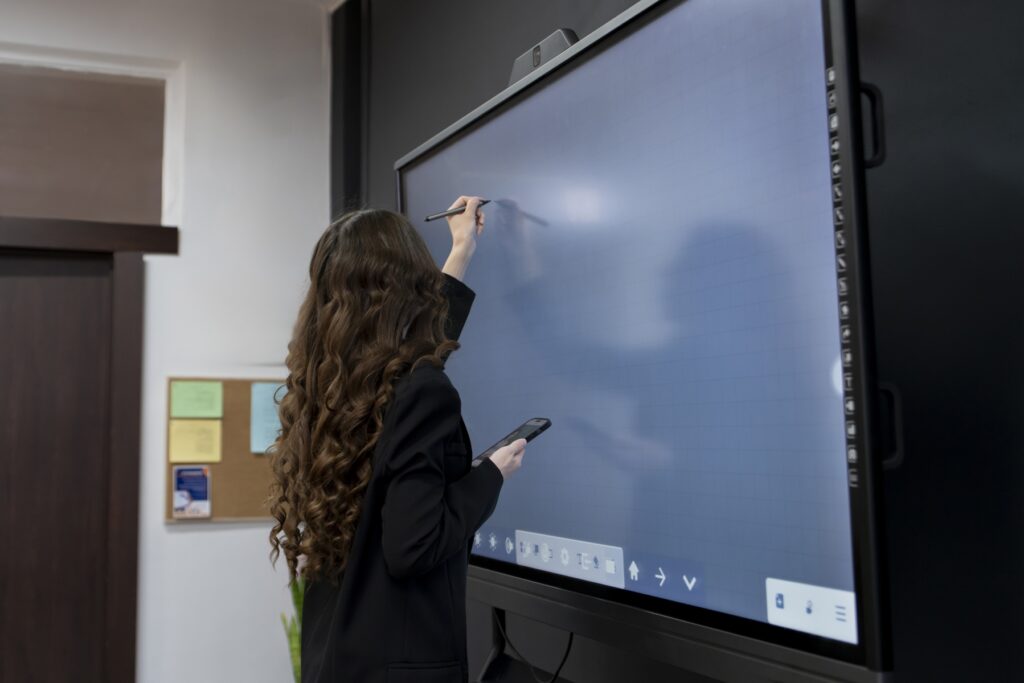
Interactive displays, often in the form of large, touch-sensitive screens, allow teachers and students to interact with content in real-time. These displays enable educators to present material in a visually engaging way, making learning more interactive and accessible. For example, a teacher can use an interactive whiteboard to display videos, animations, diagrams, and other multimedia content that can help explain complex concepts more clearly. This visual and interactive approach not only makes lessons more engaging but also accommodates different learning styles, from visual learners to kinesthetic learners who benefit from hands-on interaction.
The ability to annotate, highlight, and manipulate content directly on the screen empowers students to actively participate in lessons. Instead of passively receiving information, students can engage with the material in a more meaningful way, helping to reinforce what they’ve learned. This participatory aspect encourages critical thinking, problem-solving, and collaboration, which are essential skills for academic success.
For example, in a science classroom, an interactive display could be used to demonstrate scientific phenomena in real time. Students could manipulate virtual models of molecules, observe how variables affect experiments, or take part in simulations that would otherwise be impossible to conduct in a physical classroom due to time or resource constraints. This hands-on, interactive approach makes abstract concepts more tangible and easier to understand.
Increasing Student Engagement and Participation
Student engagement is a crucial factor in determining learning outcomes. Research has shown that students who are more engaged in the classroom are more likely to retain information and perform better academically. Interactive displays play a key role in increasing engagement by encouraging students to take an active role in their education.
One of the most powerful features of interactive displays is their ability to foster collaboration. With these systems, students can work together on projects, solve problems collectively, and share ideas with ease. Whether it’s through group discussions, digital brainstorming sessions, or shared interactive activities, these collaborative features help create a learning environment where students feel more involved and motivated to participate.
Additionally, interactive displays can incorporate real-time feedback and assessments. Teachers can use the displays to quiz students or ask for responses during lessons, instantly gauging their understanding and adjusting the lesson accordingly. This immediate feedback loop keeps students engaged and helps educators identify areas where students may need additional support, enhancing the overall learning experience.
Supporting Diverse Learning Styles
Every student learns differently, and an effective classroom should cater to these diverse learning needs. Interactive displays make it possible to support various learning styles, whether visual, auditory, or kinesthetic. For visual learners, interactive screens display content like videos, charts, and infographics, making the material more accessible. For kinesthetic learners, the ability to physically interact with the screen—by drawing diagrams, solving math problems, or manipulating models—can reinforce concepts through hands-on activities.
Moreover, the accessibility features of interactive displays make them a valuable tool for students with special needs. For students with hearing impairments, videos and text can be incorporated into lessons, while students with motor difficulties can benefit from touch-based interactions that eliminate the need for fine motor control with traditional tools like pens or markers.
Interactive displays also allow for the integration of assistive technology, such as screen readers or magnification tools, to support students with visual impairments. This inclusive approach ensures that all students have the opportunity to succeed, regardless of their individual challenges.
Enhancing Teacher Efficiency and Effectiveness
Beyond the impact on students, interactive displays also benefit educators by streamlining lesson delivery and improving teaching efficiency. With interactive screens, teachers can present lessons in a more organized and visually appealing way, reducing the need for paper-based materials and handwritten notes on whiteboards. Teachers can upload lesson plans, worksheets, and multimedia resources directly onto the screen, saving time and effort in preparation.
Interactive displays also allow for easy integration with other educational technologies, such as learning management systems (LMS), video conferencing tools, and online resources. Teachers can pull up websites, videos, and digital textbooks without having to leave the classroom or switch between devices, providing a seamless, integrated teaching experience. The ability to instantly share resources and assignments with students fosters a more dynamic and collaborative learning environment.
Furthermore, many interactive displays come equipped with cloud-based features that allow for easy sharing and collaboration on documents, presentations, or projects. This digital integration enhances teacher-student communication, making it easier to provide feedback, track progress, and engage with students both inside and outside the classroom.
Measuring the Impact on Learning Outcomes
Studies have consistently shown that the use of interactive displays in classrooms positively impacts student learning outcomes. According to a study by the National Education Association, classrooms equipped with interactive whiteboards see an improvement in student engagement and achievement, particularly in subjects like math and science. The interactive elements encourage students to think critically, collaborate with peers, and approach problems from multiple angles—skills that are essential for academic and real-world success.
In addition, a report by EdTech Review highlighted that schools using interactive displays saw improved attendance rates, higher student motivation, and increased academic performance. The ability to visually demonstrate concepts and involve students in the learning process makes lessons more memorable, resulting in better retention of information and improved test scores.
Unlocking the Full Potential of Education with CCS Presentation Systems
At CCS Presentation Systems, we understand the transformative role that interactive displays can play in modern education. As specialists in AV equipment sales, installation, and integration, we work with schools, universities, and other educational institutions to bring innovative AV solutions into the classroom. Our interactive display solutions are designed to enhance learning environments, increase student engagement, and improve learning outcomes.
Whether you are looking to upgrade your classroom technology, integrate collaborative tools into your learning spaces, or create an interactive, immersive educational experience, we can help. Contact CCS Presentation Systems today to explore how our interactive displays and AV solutions can support your educational goals and help create the optimal learning environment for your students.