In a house of worship, whether it’s a church, synagogue, mosque, or temple, the experience of the congregation is paramount. Audio-visual (AV) systems play a pivotal role in enhancing worship services by ensuring that the message, music, and visual elements are clear, engaging, and accessible to everyone present. A well-designed AV setup can bridge the gap between the worshippers and the service, creating an environment that fosters connection and engagement.
When designing AV systems for houses of worship, it’s essential to keep both sound clarity and visual accessibility in mind. Each component—ranging from microphones to speakers, projectors to screens—needs to work harmoniously to deliver an immersive experience. Here, we’ll explore key considerations and best practices to follow when designing AV systems for worship environments.
Sound Clarity and Coverage: Essential for Worship Services
In any house of worship, sound is one of the most critical components of the AV system. Clear, intelligible audio ensures that the message is heard by everyone, whether they’re seated in the front pew or the last row of the sanctuary. Here are some factors to consider for achieving optimal sound quality:
- Acoustics of the Space: The unique architecture of a house of worship can significantly impact sound quality. High ceilings, large open spaces, and hard surfaces like stone or glass can lead to sound reflections and reverberations. When designing the sound system, it’s crucial to evaluate the acoustics of the space and plan for sound dispersion that minimizes echoes or dead spots. This may require strategically placed acoustic treatments or adjustable sound systems that can adapt to the specific acoustics of the room.
- Microphone Selection and Placement: The choice of microphones is essential for capturing voices clearly and accurately. For spoken word, wireless lapel or handheld microphones can ensure the speaker or preacher’s voice is clearly amplified without the need to worry about a fixed mic. For music, consider using high-quality instrument mics and placing them in positions that capture the full range of sound. Ensuring that microphones do not pick up unwanted background noise or cause feedback is also critical to maintaining clarity.
- Speakers and Amplification: The speaker system should be designed to provide even sound coverage across the entire worship space. Line-array speakers, for example, are an excellent option for houses of worship due to their ability to provide consistent sound quality across large areas. The speaker placement should ensure that every area of the room—whether it’s the front or the back—receives a balanced and clear sound. Amplification should be sufficient to handle the space size and audience capacity, but not so powerful that it leads to distortion or uncomfortable volume levels.
- Feedback Control: Feedback issues are a common challenge in worship spaces, particularly when using microphones with powerful sound systems. An effective AV setup will include a feedback suppression system or carefully placed microphones and speakers to reduce the risk of acoustic feedback. These systems can automatically adjust frequencies to eliminate feedback, ensuring a smooth and uninterrupted worship experience.
Visual Accessibility: Ensuring Everyone Can See and Engage
Visual accessibility is equally as important as sound clarity in a house of worship. Congregants need to be able to see the service, whether it’s the speaker, the musical performance, or the projected lyrics to hymns and prayers. Here’s how to design a visual system that maximizes visibility for all attendees:
- Projector and Screen Placement: Projectors are commonly used in worship settings to display song lyrics, scripture passages, and other visual elements. When choosing a projector, it’s essential to consider factors such as brightness, resolution, and lens options to ensure that the content is visible from any seat in the room. Additionally, the placement of the screen should allow all attendees, including those in the back and sides of the room, to easily view the content without obstruction. The screen should be large enough to accommodate the space and avoid eye strain, while also considering ambient light conditions that may impact visibility.
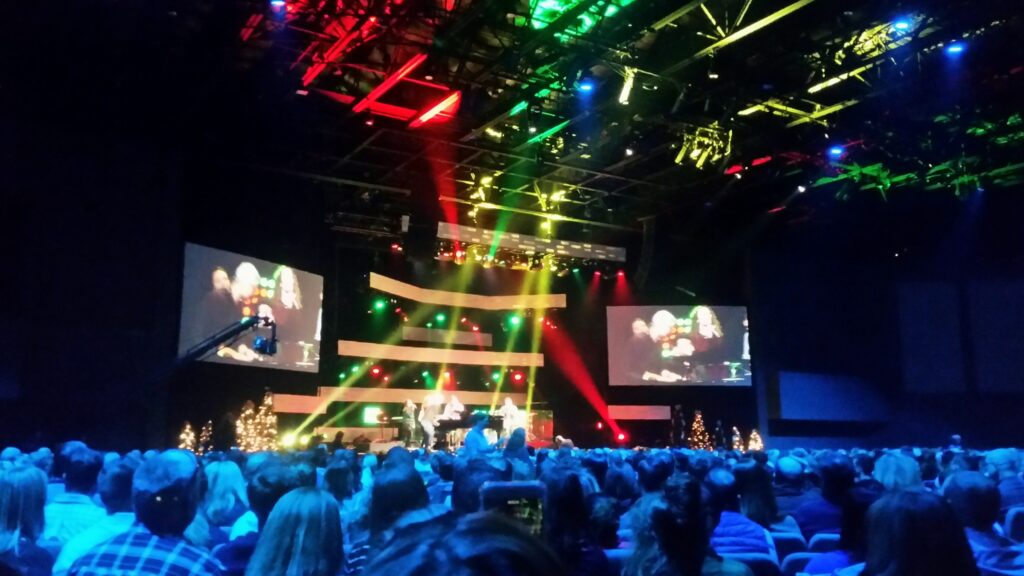
- Multiple Display Locations: In larger worship spaces, relying on a single projector or screen may not provide sufficient coverage for all congregants. Multiple screens, placed strategically throughout the space, can ensure that everyone has a clear view of the visuals, no matter where they are seated. These additional screens can also be used to display different types of content, such as live camera feeds of the service or lyrics, enhancing the overall experience.
- Live Streaming and Digital Accessibility: Many houses of worship now offer live streaming services for those who cannot attend in person, such as homebound individuals or congregants who are traveling. By incorporating cameras and live streaming equipment into the AV design, worship services can be broadcasted to a wider audience. High-definition cameras, combined with streaming solutions, ensure that remote worshippers can enjoy the service in real-time. This technology also supports accessibility features, such as subtitles or translations, further expanding the reach of the service.
- Lighting Design: Lighting is often an overlooked component of AV systems, but it plays a crucial role in enhancing the worship experience. Proper lighting not only ensures that the speaker or worship leader is visible but also helps set the tone for the service. Dimmable lighting systems allow the atmosphere to shift from bright and energetic to soft and contemplative. When designing lighting for worship spaces, it’s important to balance visibility with mood, ensuring that the lighting complements the content being presented without distracting from it.
Seamless Integration of Audio and Visual Elements
To create a truly immersive worship experience, the AV system must be more than just a collection of independent audio and visual components. It should be a seamlessly integrated system that allows for effortless control and operation.
- Centralized Control System: A user-friendly control system should be implemented to manage all audio and visual components from a single interface. This can include audio mixing, camera controls, projector and screen operation, and lighting adjustments. Having a unified control system simplifies operation, reducing the likelihood of technical issues during services.
- Training and Support: It’s essential that worship teams are trained to use the AV system effectively. Staff and volunteers should be comfortable with operating the system to ensure that services run smoothly. Offering ongoing training and technical support ensures that any issues can be quickly addressed without disrupting the worship experience.
Maximizing Worship with CCS Presentation Systems
At CCS Presentation Systems, we specialize in designing, installing, and integrating advanced AV systems for houses of worship. Our team understands the unique needs of these spaces and works closely with each client to design solutions that enhance both sound and visual accessibility. Whether you’re looking to upgrade your existing AV system or design a new setup from scratch, we provide tailored solutions that ensure every worship experience is impactful and engaging.
If you’re ready to enhance your house of worship with a state-of-the-art AV system, contact CCS Presentation Systems today. Our expertise in AV integration can help you create an environment that connects, engages, and inspires your congregation.